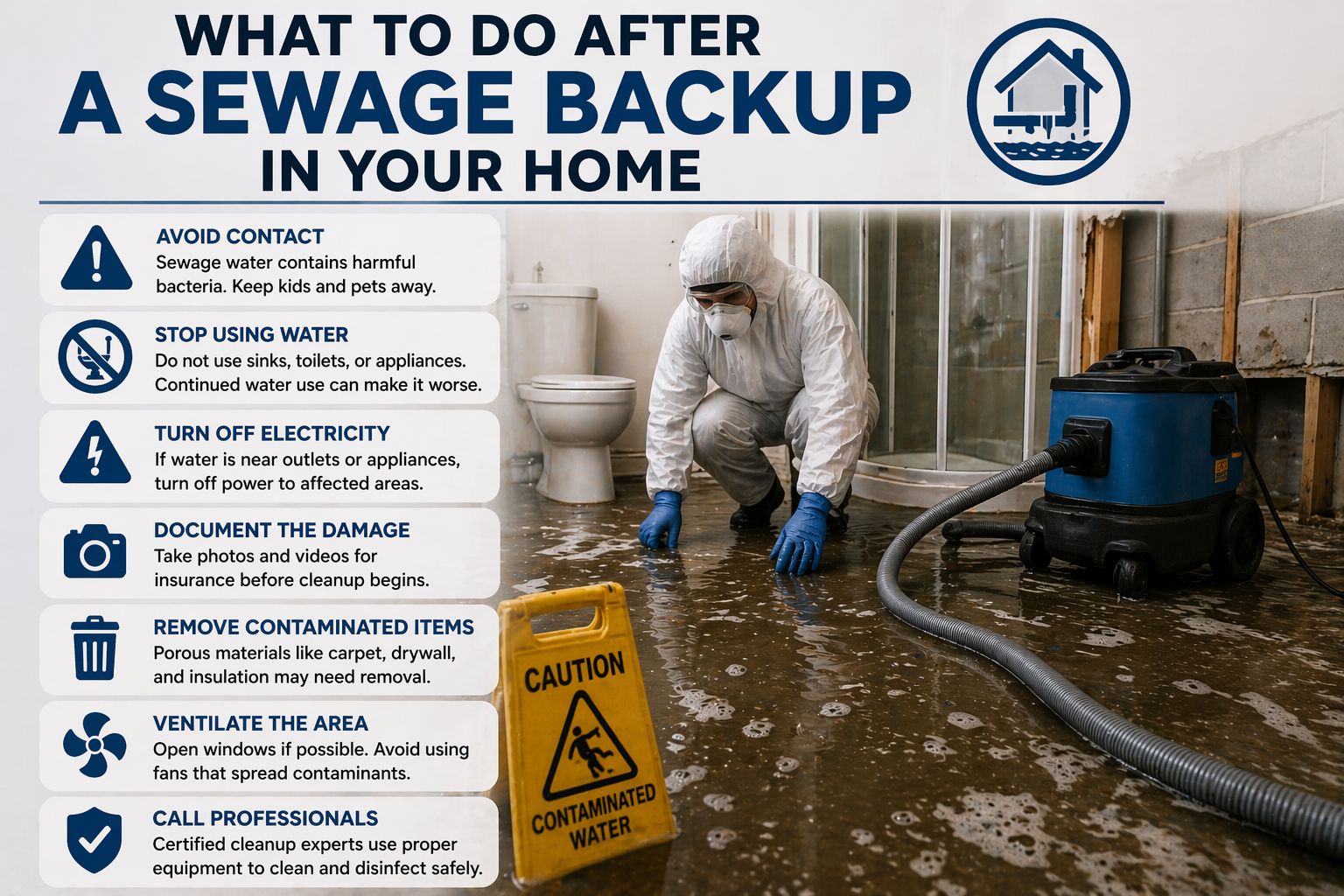
A sewage backup in your home should be treated as an urgent health and property issue. Contaminated water can contain bacteria, viruses, and harmful waste that may spread quickly through affected areas.
Avoid contact with the sewage water and keep children and pets away from the contaminated space. Do not walk through the area unless necessary and wear protective gear if entry is required.
Stop using sinks, toilets, showers, and appliances connected to the drain system until the cause of the backup is identified. Continued water use can make the overflow worse.
If it is safe, turn off electricity to affected rooms where water is near outlets or appliances. Avoid handling electrical systems while standing in wet areas.
Document the damage with photos and videos for insurance purposes. Take pictures before cleanup or disposal begins whenever possible.
Porous materials such as carpet, drywall, insulation, and upholstered items may need professional evaluation or removal depending on the severity of contamination.
Open windows for ventilation if conditions allow, but avoid using fans that may spread airborne contaminants through the home.
Professional sewage backup cleanup services use proper protective equipment, sanitation procedures, and drying equipment to restore the property safely and reduce health risks.